
A new bump in your groin or near your belly button can be worrying, especially if it aches when you lift or cough. Many hernias start out small and painless, so people often put off getting them checked. Knowing the signs helps you decide what to do next.
Dr. Deborah Martin is a board-certified general surgeon with more than 30 years of experience caring for patients in the Atlanta area. This page covers the most common hernia types, the symptoms to watch for, and the emergency signs that need care right away. You can also read about hernia repair surgery with Dr. Martin.
If a bulge or pain is on your mind, you can request an appointment at our Alpharetta office. Dr. Martin will examine you and explain what is going on.
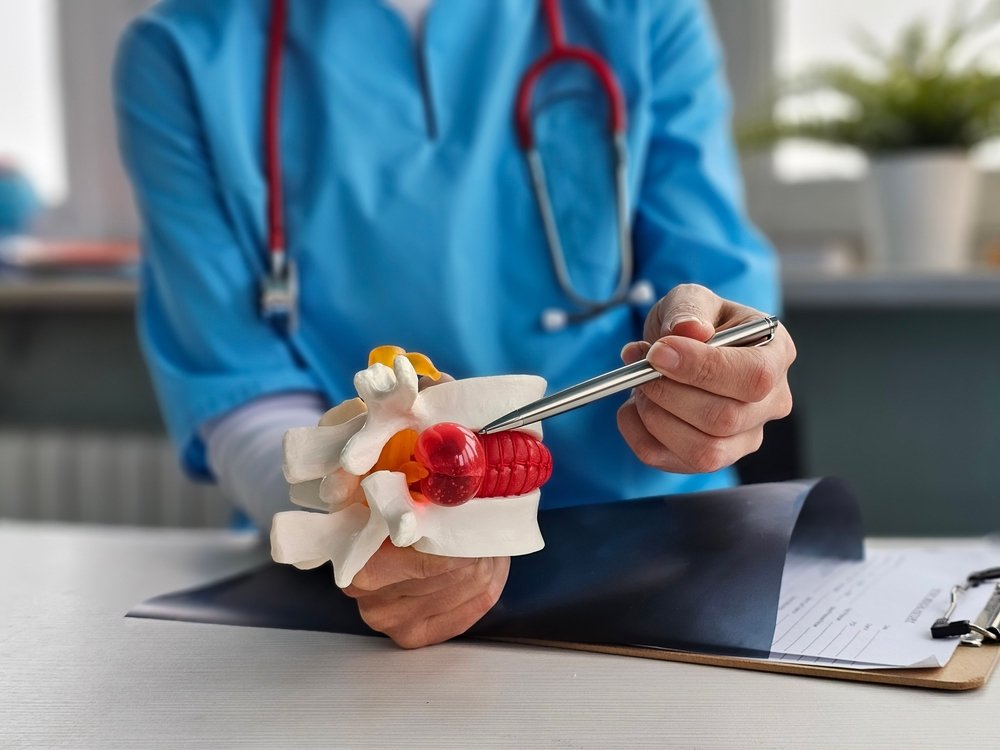
A hernia happens when tissue or an organ pushes through a weak spot in the muscle or tissue that normally holds it in. The three types people ask about most often are below.
The most common sign of any hernia is a bulge you can see or feel. Many hernias cause no other symptoms at first.
A hernia may slide in and out of place. A bulge that comes and goes is still worth having checked.
See a surgeon soon if you notice a new bulge in your groin or belly, or pain that keeps coming back. The MedlinePlus guide to hernias, from the National Library of Medicine, gives the same advice. It says to contact your provider for any groin pain, swelling, or bulge, or a bulge near a past surgical cut.
Book a visit sooner if:
Not every hernia needs surgery right away, and some small inguinal hernias can be watched.
Go to the nearest emergency room (ER) or call 911 if your hernia becomes stuck and painful, or you have signs of a blocked bowel. NIDDK explains that a stuck hernia can lose its blood supply. This is called strangulation, and it is life-threatening.
Warning signs include:
Dr. Martin also treats small bowel obstruction, which can happen when part of the intestine gets trapped in a hernia.
Dr. Martin will ask about your symptoms and medical history and then examine you. A hernia exam usually includes standing, coughing, or straining while the surgeon checks for a bulge. If the diagnosis is not clear, she may recommend an imaging test, such as an ultrasound, a computed tomography (CT) scan, or magnetic resonance imaging (MRI).
Many hernias need repair at some point. Dr. Martin explains your options, which can include open repair, laparoscopic surgery, or watchful waiting for a small hernia.
Many people feel discomfort, pain, heaviness, or burning near the bulge, according to NIDDK. Symptoms often get worse when you strain, lift, cough, or stand for a long time, and they ease with rest. Some hernias cause no pain at all.
Make an appointment as soon as you notice a new bulge in your groin or belly, or groin pain that does not go away. MedlinePlus advises contacting your provider for any of these signs. Go to the ER right away if the hernia is stuck, very painful, or discolored.
No. Surgery is the only treatment that permanently fixes a hernia, according to MedlinePlus. The main exception is an umbilical hernia in a baby, which can sometimes close without treatment.
A weak area in the muscle and connective tissue of the belly wall lets a hernia form. NIDDK says pressure inside the abdomen can add to the problem, such as chronic cough, chronic constipation, heavy lifting, or standing and walking for many hours at work.
Men are 8 to 10 times more likely than women to get one, and the chance rises with age. NIDDK also lists a family history of inguinal hernias, a lower body mass index, and connective tissue disorders as risk factors.
A general surgeon diagnoses hernias and repairs them when needed. Dr. Martin is a board-certified general surgeon who treats groin, belly button, and incisional hernias, as well as hernias that come back after an earlier repair.